Follow us on:

.svg)


We ran the DNT ThermNight TNC225R and TNC635R side by side. The pricier scope is better, but it might not be the one you need.


.png)
If you've spent any time looking at thermal optics, you've probably heard the same advice over and over: buy the highest resolution you can afford.
And after using both the DNT ThermNight TNC225R and TNC635R, there's no question the higher-resolution TNC635R produces a smoother image, more clearly identifies animals, and simply makes scanning easier. But that doesn't automatically make it the right choice for everyone.
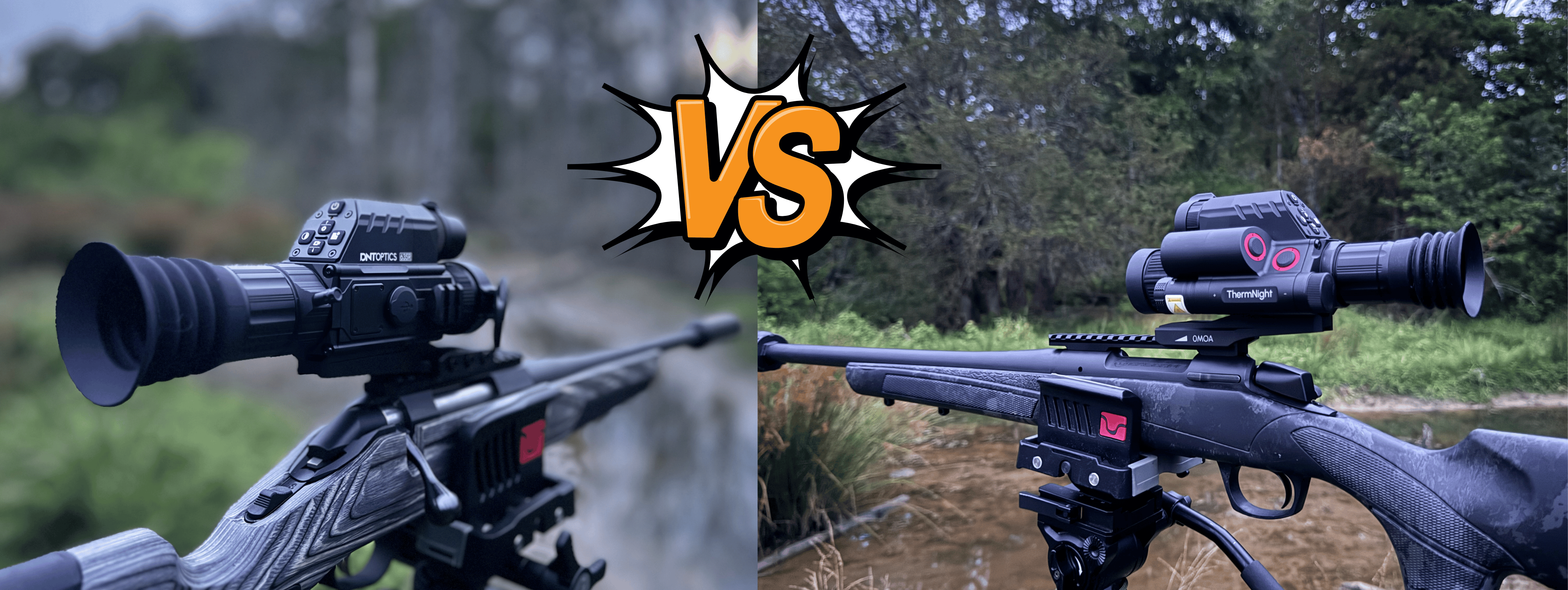
After several hunts and a lot of time comparing these scopes side by side, I came away asking a different question entirely: do you really need the extra resolution, or does the TNC225R provide everything most hunters actually need?
Before we get into the field impressions, here's how the two stack up on paper:
Keep those numbers in mind as you read — especially the resolution and NETD figures, since those are what's actually driving the differences I noticed in the field.
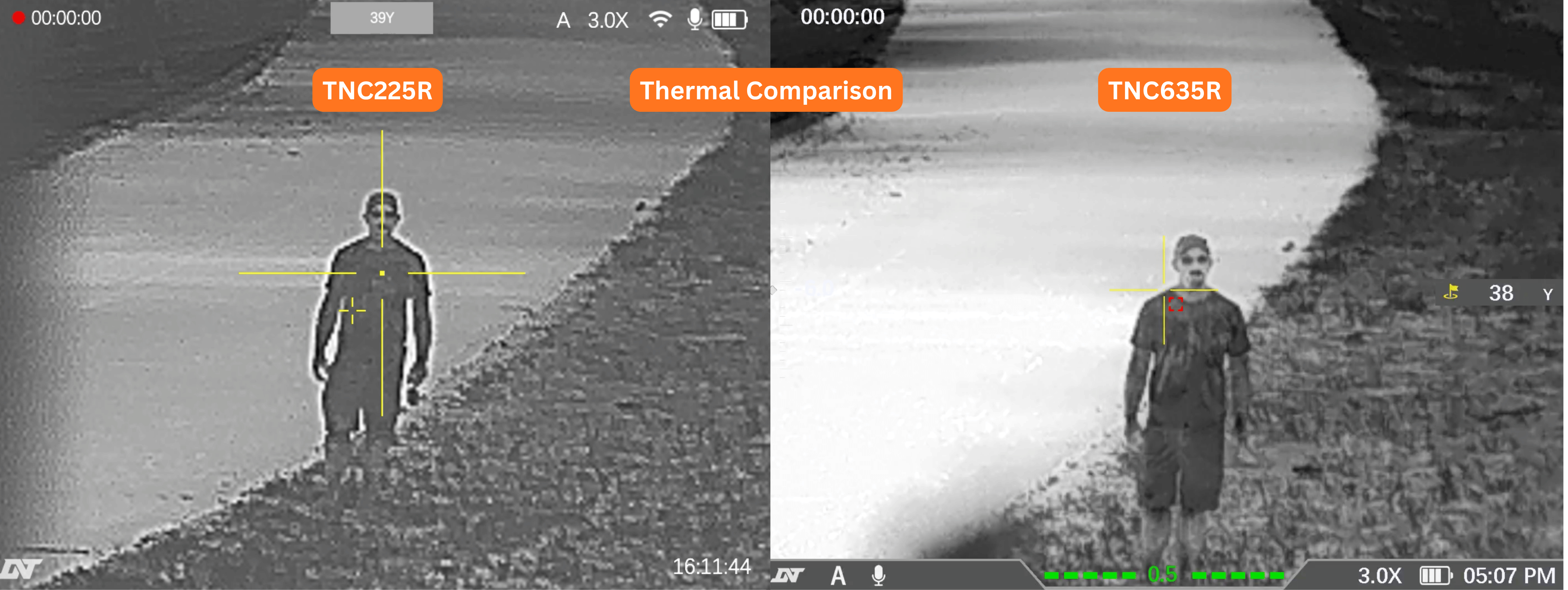
The first thing I noticed moving from the 225R to the 635R was how much smoother and less pixelated the image looked. I could make out individual leaves on trees rather than just a tree. Animals were better separated from the background, and identifying targets was easier and faster. While it is fairly easy to tell the differences in the images below, the view through the scope was even more drastically different.
.png)
That difference became especially noticeable once I got beyond about 175–200 yards. Inside that distance, both scopes performed surprisingly well. Past 200 yards, the TNC635R started to pull away — identifying a single animal in a large field became significantly easier, and distinguishing a coyote from a small deer took much less second-guessing. (That resolution jump from 256×192 to 640×512 — see the spec table above — is the biggest single factor here.)
That doesn't mean the TNC225R couldn't get the job done. It just meant I spent more time watching an animal's movements and making fine focus adjustments before making a decision. And that's really where the extra money goes: you're not paying for a prettier image, you're paying for faster, more confident identification.
If there's one thing that caught me off guard during this comparison, it was how often I found myself impressed by the TNC225R.
Most of my hunting setups in North Carolina are under 200 yards. Even on larger properties, our rolling terrain usually allows me to set up for closer, higher-percentage shots. Inside those distances, I never felt like the TNC225R was holding me back. It's simply more capable than its resolution numbers suggest.
This is the part of the conversation I think a lot of people overlook. These aren't traditional thermal scopes — they're multispectral scopes, and that changes the buying equation.
.png)
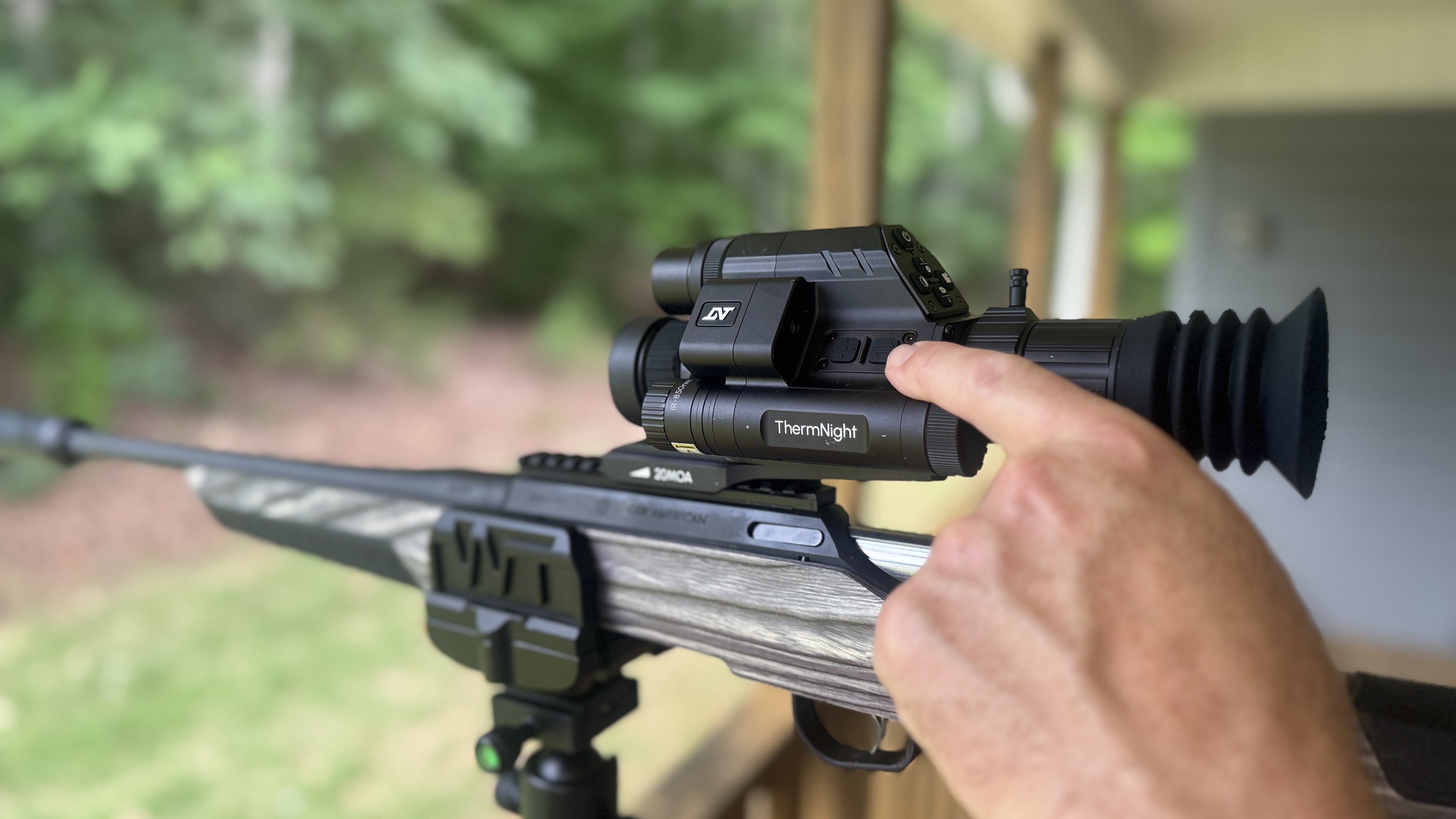
One of the biggest surprises using both optics was how often I switched from thermal to night vision to identify animals. The thermal spectrum is fantastic for detection, but when conditions are right and there aren't trees or vegetation reflecting the IR light, night vision mode gives you a picture that looks much more like watching a television screen than interpreting a thermal blob. Body shape, ears, legs, and other details become much easier to see. More than once, I found an animal with thermal and then switched to night vision for final confirmation — that's a huge advantage that isn't discussed nearly enough.
Of course, there are limits. Looking into a field with taller grass, I could easily see a deer using thermal, but once I switched to night vision, the IR light reflected off the grass and limited my view. In that situation, thermal was unquestionably better.
The lesson? Neither mode is always superior. The ability to switch between the two is what makes the ThermNight series so useful.

Here's something I wish I'd understood going in: because the thermal and night vision channels are two separate optical paths, each one needs its own zero. I knew that at the beginning of sighting in, but there was one part I didn't realize that would have saved some frustration on the range. If I had used the features DNT provides for zeroing one mode, then switching modes while keeping the frame frozen to zero the second mode, I would have saved a few rounds and some time.
Once that clicked, sighting in got a lot easier. DNT's one-shot zeroing feature speeds up each individual zero, but budget time for confirming zero on the two separate modes. If you're coming from a standard single-channel scope, this is the biggest adjustment in how you approach setup — and it applies to both the TNC225R and the TNC635R equally.
Don't get caught up in where you hunt — the better question is how you hunt.
I live in North Carolina and have setups where a 200-yard shot would be considered long. I also have access to places where I could see 500 or 600 yards and need to identify an animal out at those distances. I'd rather take the closer shot, but the opportunity to harvest a coyote sometimes starts a lot farther out than where you actually take the shot.
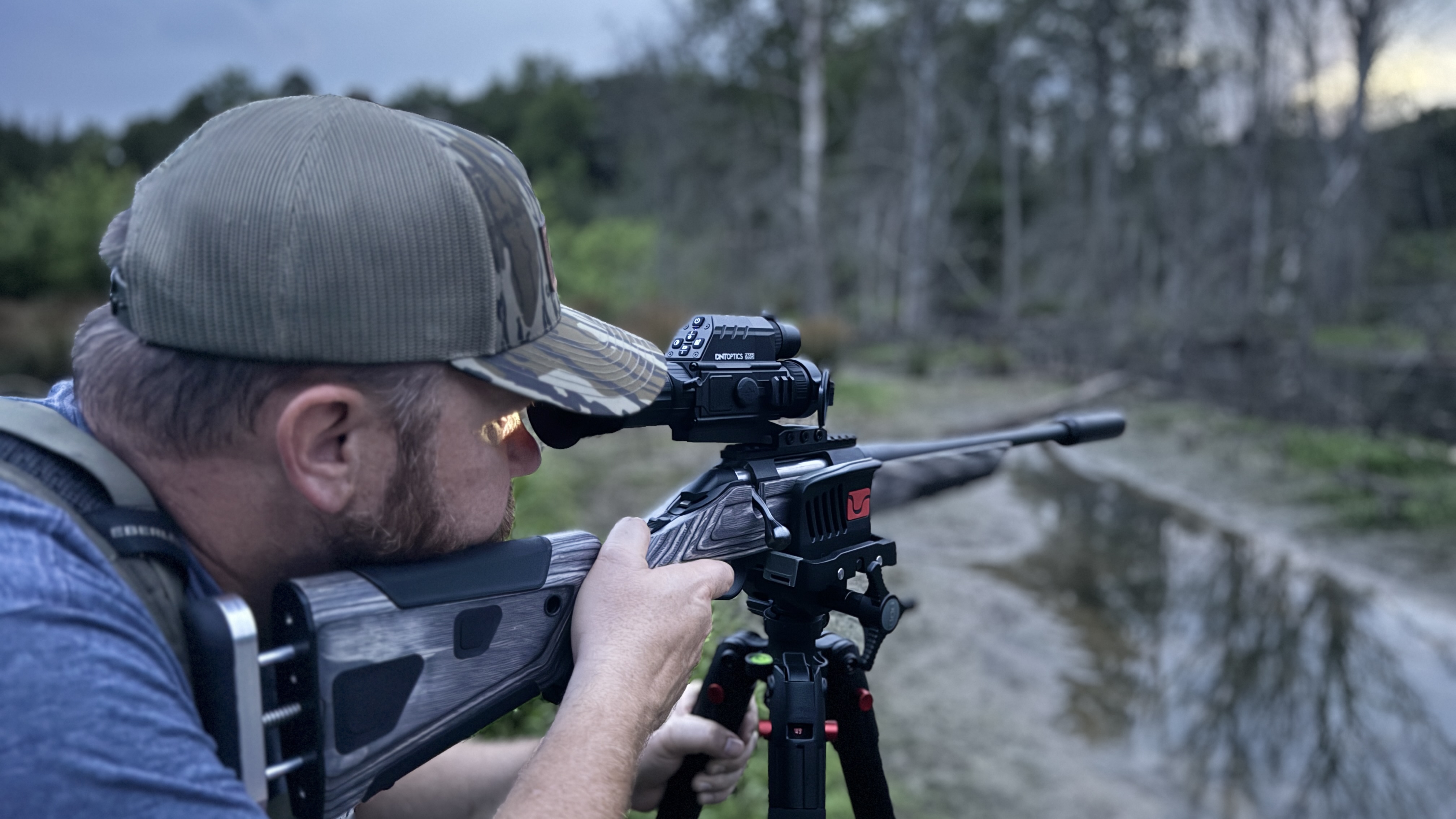
The size of the areas you hunt, and the distances at which you need to confidently identify animals, matter when you're shopping for your ideal setup.
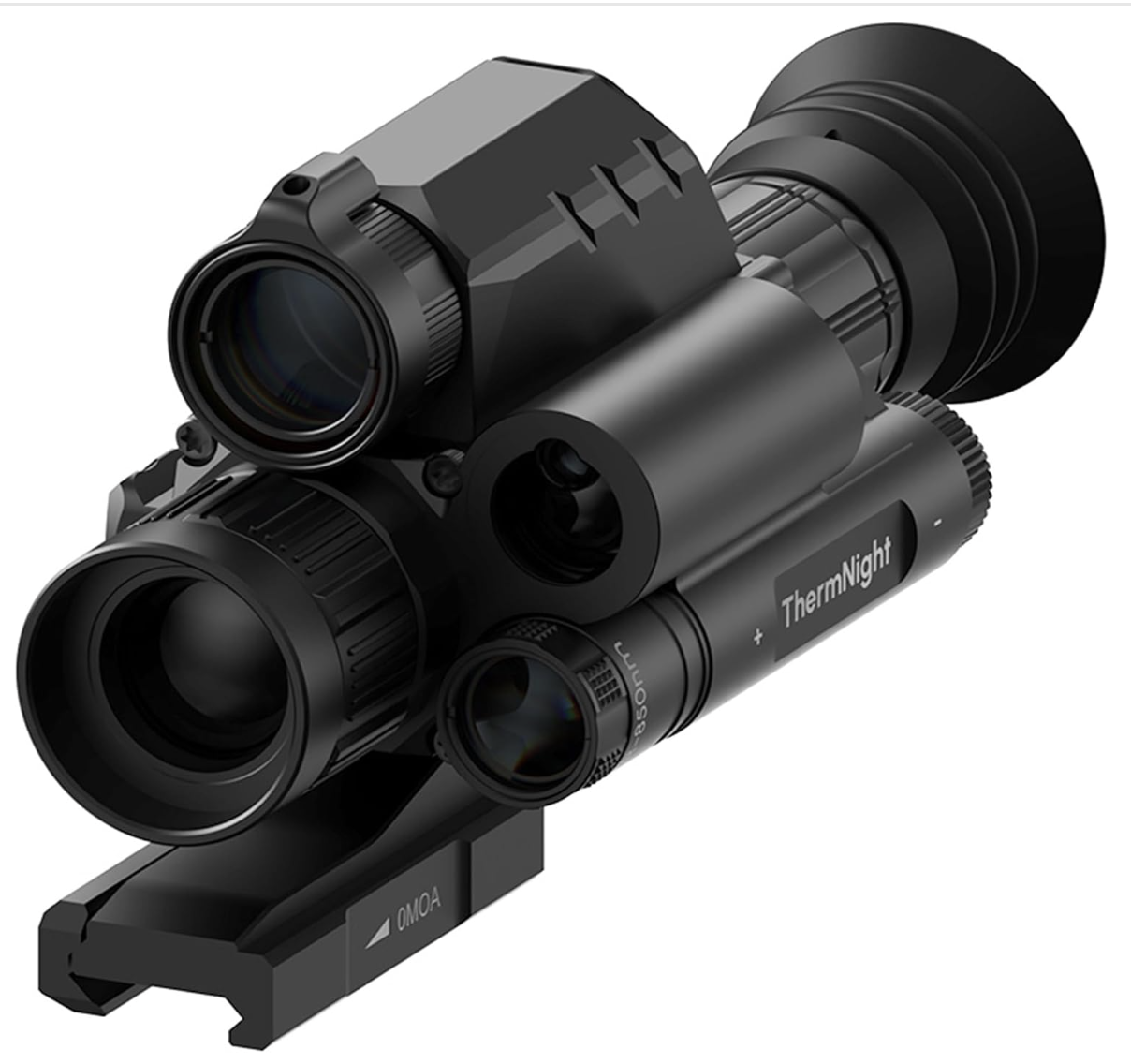
Buy the TNC225R if:
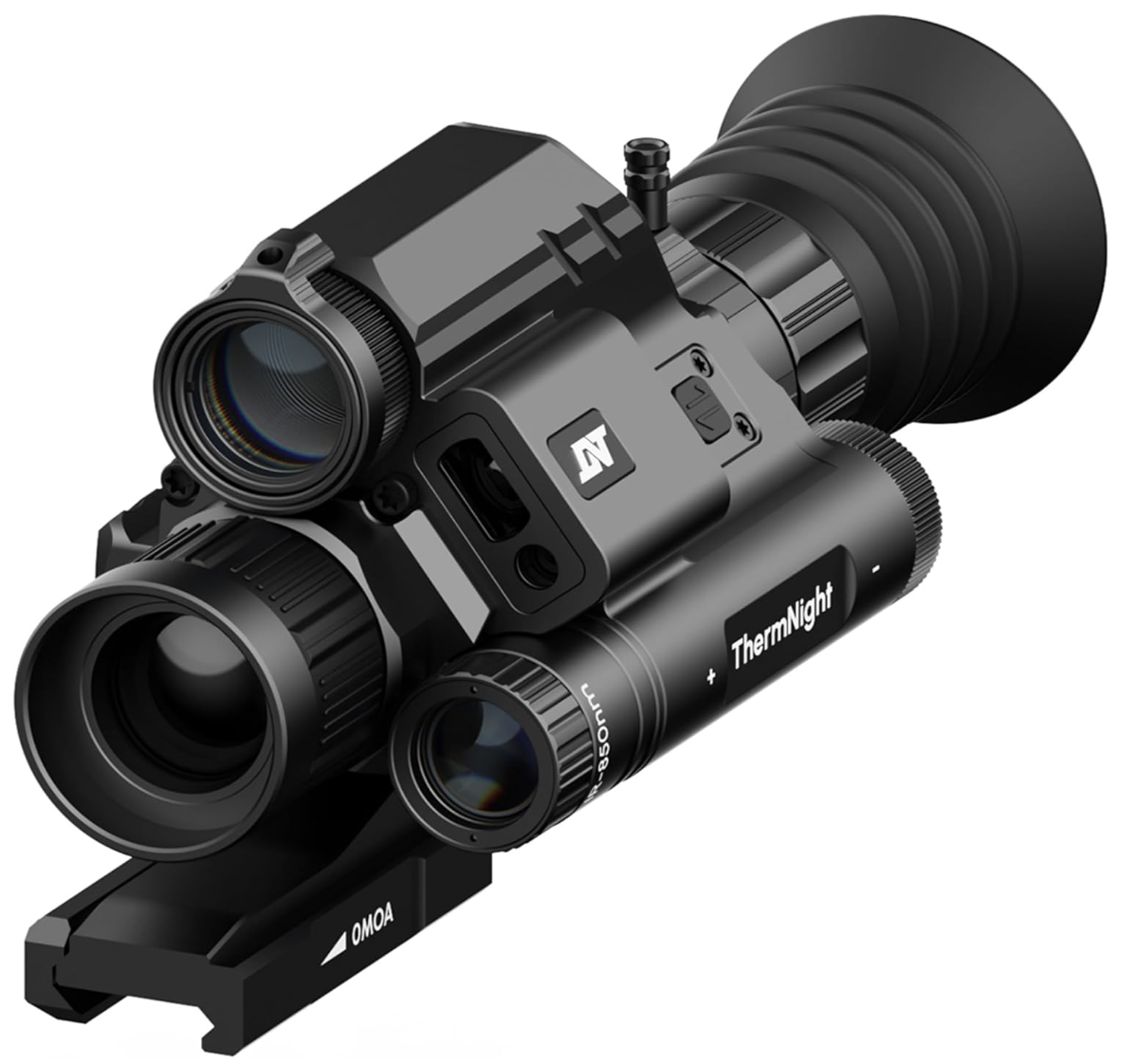
Buy the TNC635R if:
(Refer back to the spec table above if you want the full side-by-side breakdown before deciding.)
Q: Are the TNC225R and TNC635R actually two scopes in one?
A: Yes — both are "multispectral" scopes, meaning they combine a thermal imaging channel with a separate digital night vision (and daylight) channel in one housing. You can toggle between them or view both at once with Picture-in-Picture.
Q: Do I need to zero both channels separately?
A: Yes. Because the thermal and night vision channels are independent optical paths, each one needs its own zero. The good news: DNT lets you zero one mode, then switch modes while keeping the frame frozen to zero the second — so it's two confirmations, not two full separate processes from scratch.
Q: What's the warranty on each scope?
A: The TNC225R carries a 2-year warranty. The TNC635R carries a 3-year warranty.
Q: What batteries do they use?
A: The TNC225R uses removable flat-top 18650 batteries. The TNC635R uses flat-top 21700 batteries, which run larger and typically last longer per charge.
Q: Can I use these in daylight, not just at night?
A: Yes. The night vision channel on both scopes is digital (not analog image-intensifier tech), so it's safe to use in full daylight and functions as a standard digital daytime optic.
Q: Will pointing the thermal at the sun damage it?
A: Yes — on both models. DNT explicitly warns against aiming the thermal channel at the sun or open flame, as it can permanently damage the sensor.
Q: Is the TNC225R "too low resolution" to be useful?
A: Not for the ranges most hunters actually shoot. It's a legitimate limitation past 200 yards, but inside that range — brush, timber edges, smaller fields — it performs well and the price-to-capability ratio is hard to beat.
Q: Does the TNC635R work with a Mac?
A: Firmware updates for the ThermNight lineup are typically handled through Windows PC software, so Mac users may need a workaround (a Windows VM, a friend's PC, etc.) for firmware updates specifically — day-to-day use through the DNT app isn't affected. Keep in mind, you will have to download photos or video through the DNT app instead of being able to plug your scope straight into a Mac computer. I was able to get videos from the TNC225R to download onto a Mac, but nothing from the TNC635R would transfer.
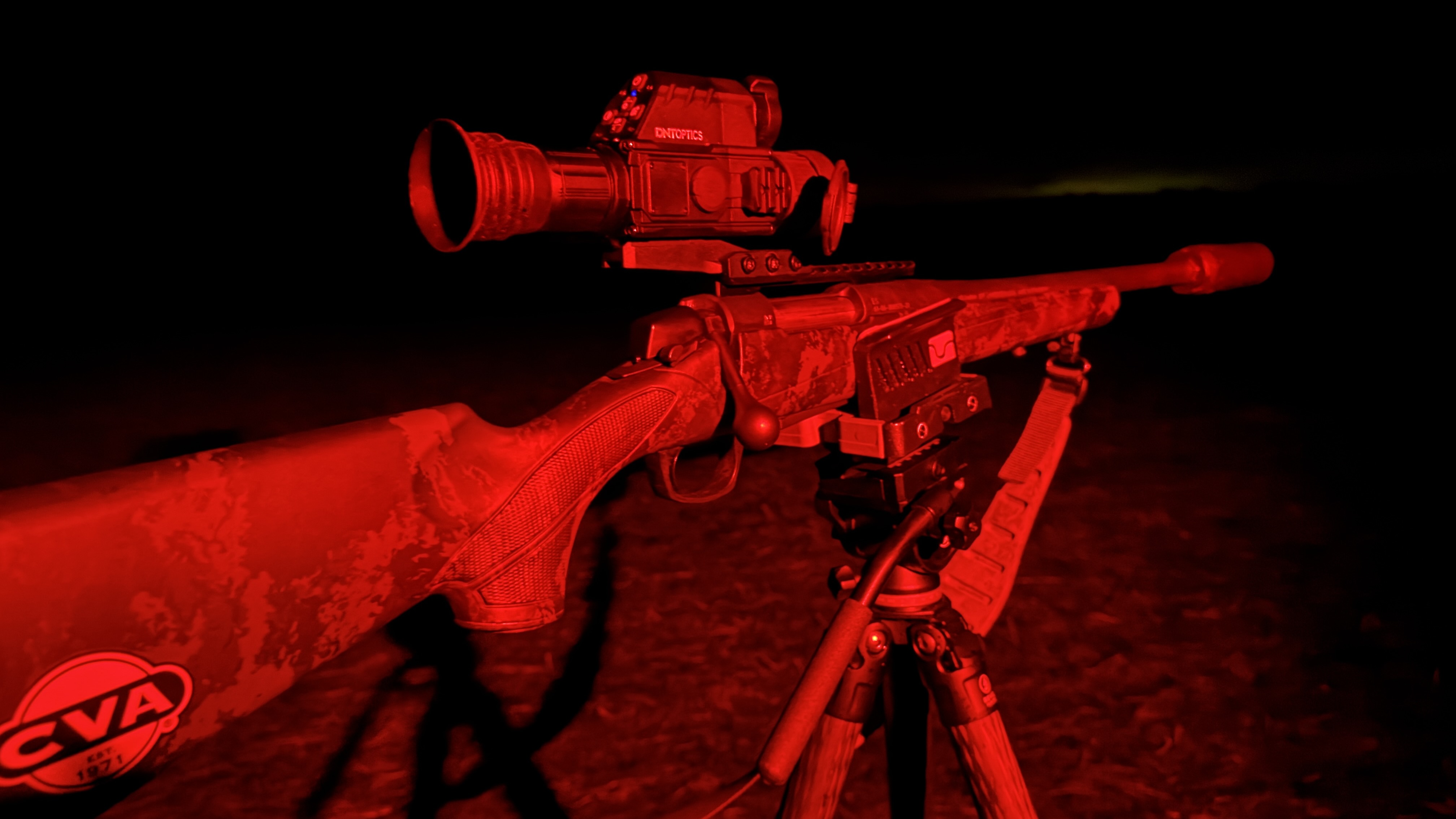
The TNC635R is unquestionably the better thermal scope — the image is smoother, identification is easier, and the extra resolution absolutely matters when you're scanning large fields or making quick decisions. But after spending considerable time with both, I came away with an even greater appreciation for the TNC225R.
If I could keep only one, I'd choose the TNC225R. That might sound strange given the 635R is superior on paper, but it fits the way I hunt: most of my setups are within 200 yards, and I often use thermal to locate animals before switching to night vision for final identification.
Don't buy either of these scopes solely for the resolution number. Make your decision based on how far you need to confidently identify animals, and how much time you spend scanning large areas.
Robbie has enjoyed the outdoors since he can remember. His earliest memories include hours upon hours of squirrel hunting and learning how to enjoy all aspects of hunting season in God's wonderful outdoors. Now he is always working hard and testing gear in the field to give you the best review and most thorough information he possibly can.
All opinions are ours. Some items we receive for free, borrow, or purchase at a discount, but this never impacts our opinions or freedom to report them.
Also, most product links you see are affiliate links - meaning that we may earn a small commission if you click it and make a purchase. (We greatly appreciate your support in doing this!!!)
.svg)